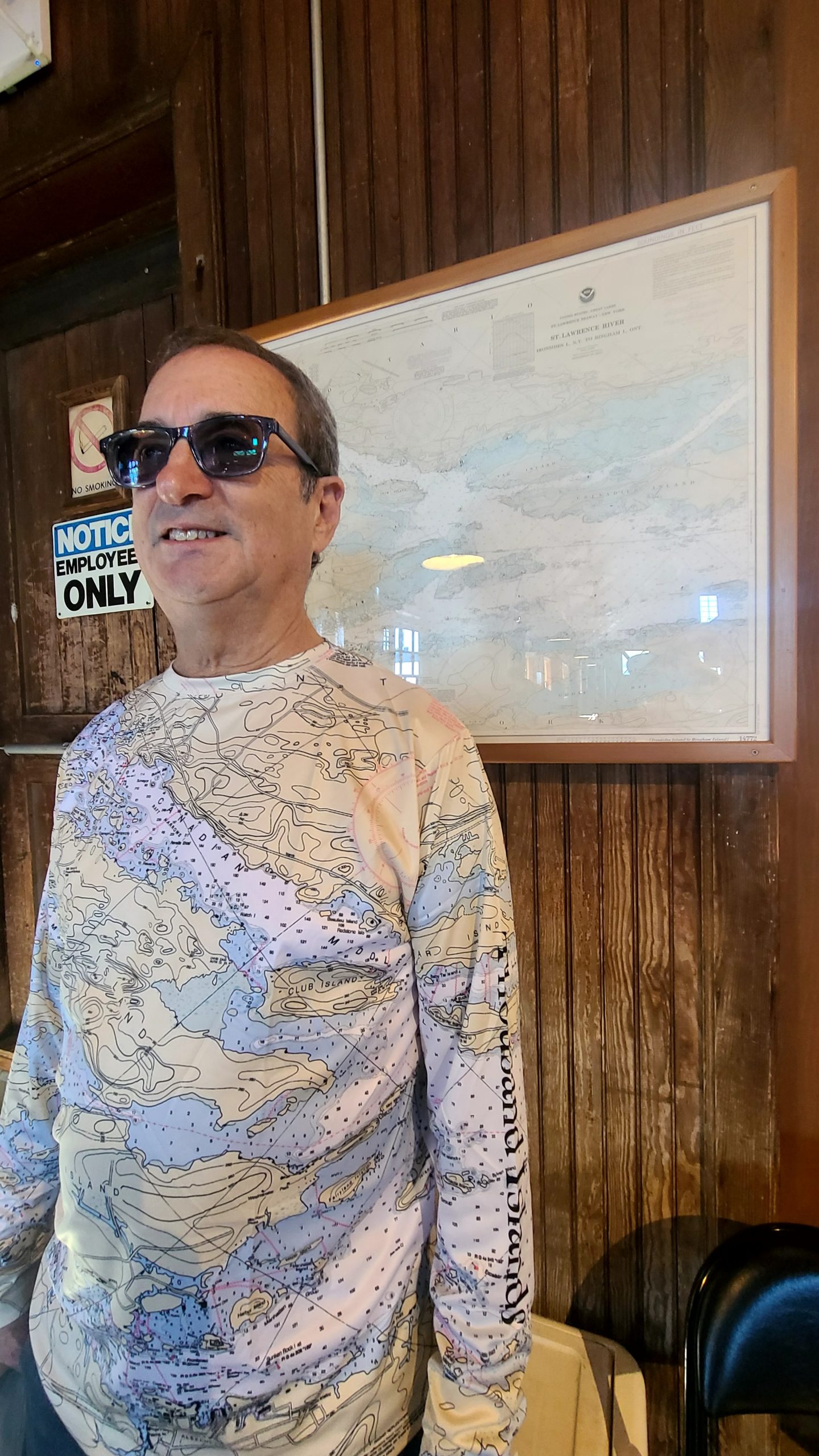
Dear Honorary Loopers,
Week 1 of our Great Lakes Loop (July 16-22) was all about preparation, as we oversaw mechanics, cleaned, tidied, and unpacked, and provisioned the boat. The Affection moved only a few hundred feet, from one side of the St Lawrence to the other, and then a few miles upstream, to Clayton, staying close to Alexandria Bay and the continuing repairs.
Week 2 of the Great Lakes Loop (July 23-29) felt like the first real week of the voyage, as we shifted modes from preparation to progress, the boat began to cover distance, and we began to live aboard again.
As I look back over the logbook for those first two “re-entry” weeks, I note recurring themes rather than new daily itineraries and adventures. In these first two “catch-up” posts (Week 1 this time, Week 2 next time), I’ll focus on the themes rather than recounting the daily events.
Week 1: Preparation
What’s New – Firsts
During the preparatory week, the mechanics made some final improvements, fixed several existing issues, and helped fix some new ones.
The two new aluminum fuel tanks are secured by stainless steel straps to the superstructure of the boat. On inspection, Jeff realized that there was no insulation separating the two metals, as there had been on the old tanks.
Science lesson: in the presence of moisture or salt, galvanic corrosion (electrolysis) results when stainless steel touches aluminum, resulting in the aluminum, acting as a sacrificial anode, deteriorating. Applied science: the mechanics loosened every strap and inserted a layer of insulation. There was no additional financial cost to us, but the job took several long days of labor, so we had to stay close to A-Bay.
Two additional cleats were installed in the aft cockpit, so we could hang fenders for docking separately from the dock lines, something the deckhand (me) had wanted for a long time.😊
On the trip to Clayton, I smelled a strong odor of diesel up on the bridge. After long seconds of sniffing various parts of the boat (my first thought, of course, was the place where the old fuel tanks had leaked- thank goodness that problem was solved by the new tanks!), I enlisted Jeff’s help. He quicky identified the cause – the mechanics had re-installed a valve wrong that pushed fuel from one fuel tank to the other, and it was pushing fuel out of the boat! A quick fix, and a valuable lesson about assuming other people will always do things right – don’t!
Approaching Clayton, as Jeff tried to maneuver out of the channel and into the marina, he discovered that the starboard engine wouldn’t respond to him pulling back on the throttle to slow our speed. While he tried to slow us down, I radioed to the marina staff and alerted them that we were in distress. They quicky reassigned us to a slip where no other boat was docked, and we came in bow first instead of turning and backing into the slip as we usually do. Several dockhands and other boaters came out to help, and we made it safely in, avoiding the brand-new power pedestal on that section of the dock. It turned out that the marina staff was as relieved as we were – another boat had recently taken out that same section of dock!
The mechanics tried to diagnose the problem, but it was our Detroit diesel guru Carlo, back in Ft Lauderdale, who solved the mystery. In climbing over the engine in the course of doing other work, someone had pushed a lever to a new position, and it interfered with the throttle mechanism. Simple fix, lesson learned. Thanks (as always), Carlo!
There were other firsts, including:
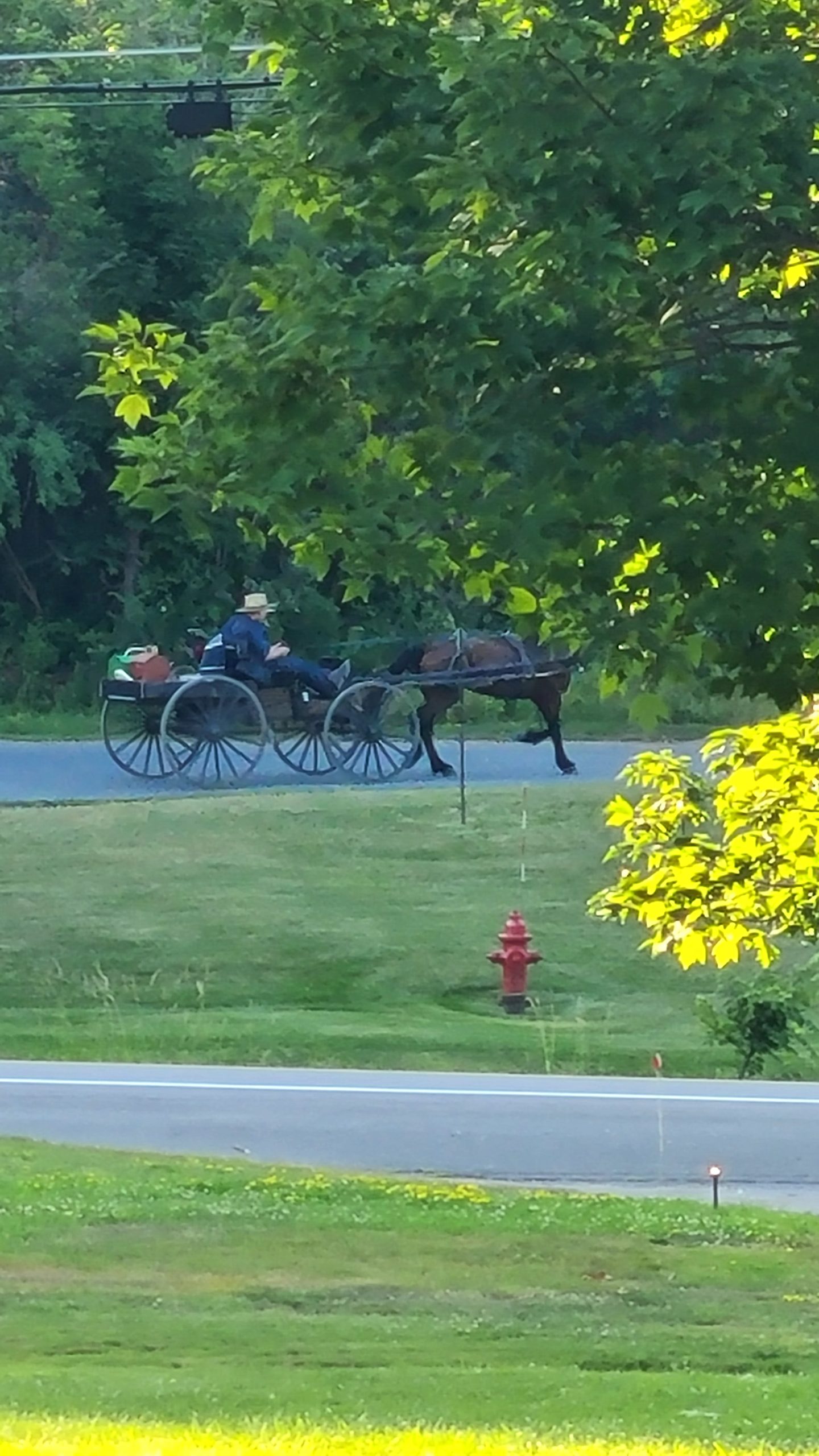
–Watching a horse and buggy commute to and from work along the highway in front of our motor lodge in Alexandria Bay. I assume the Amish driver was commuting, because I saw the same buggy go one direction early in the morning and the other direction in the evening. It was pure happenstance that I caught sight of the rapidly moving conveyance. Every morning I spent a few minutes in the rocking chair thoughtfully provided for the front porch of every unit. That rocking chair time was a delightful lagniappe, a little something extra that gave me joy.
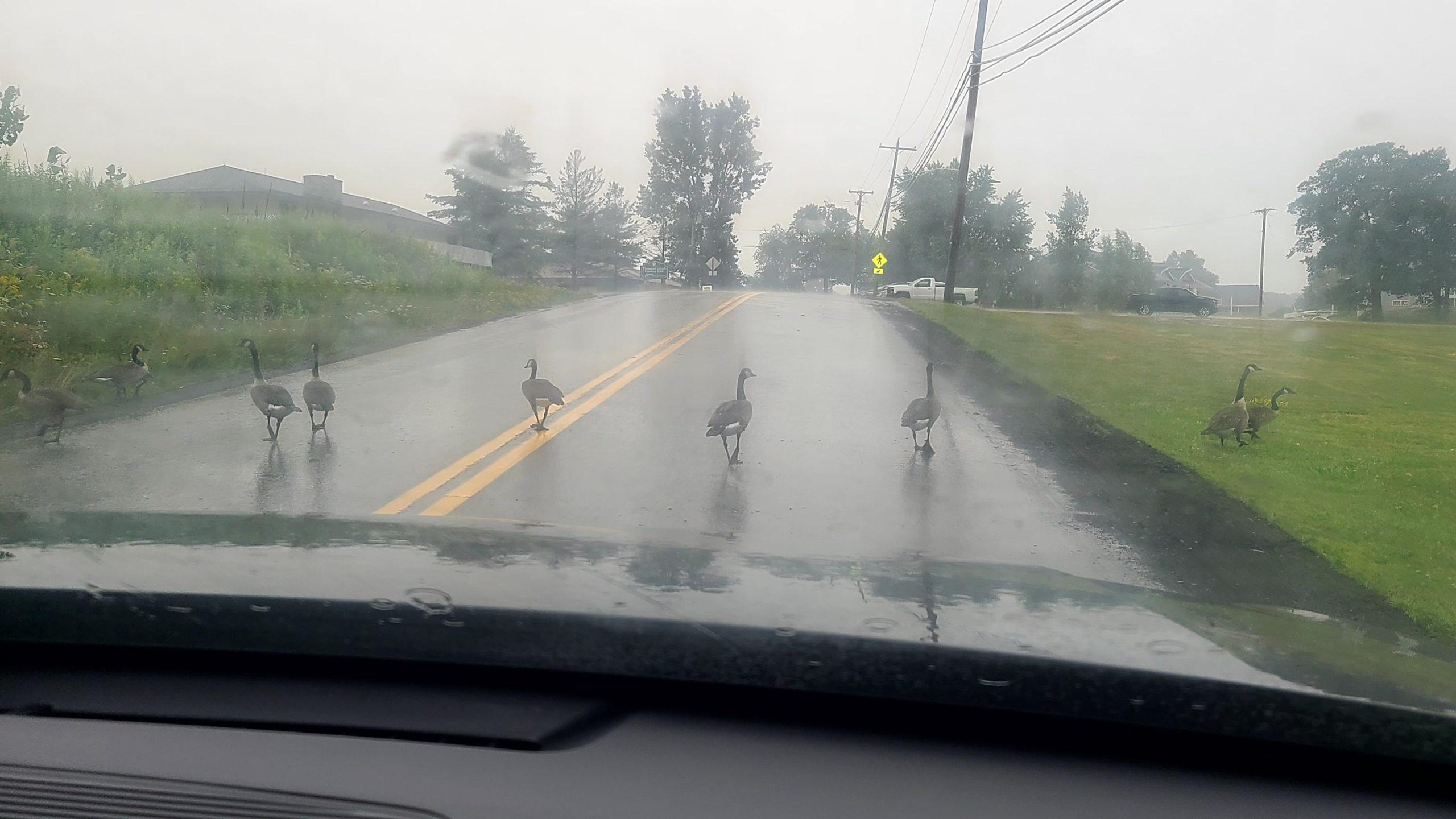
Seeing wildlife around the TI Club: Canada geese, gulls, a doe, a turkey, and a loon. One morning I watched a heron fly low across the harbor going downstream. That evening I saw a heron – the same? fly low upstream – a commuter like the Amish farmer? Another lagniappe: one evening, listening to the familiar call of the geese as they flew by, I realized that the call and response was a major third interval! Who knew that geese were musical?
What’s Familiar / Continuity
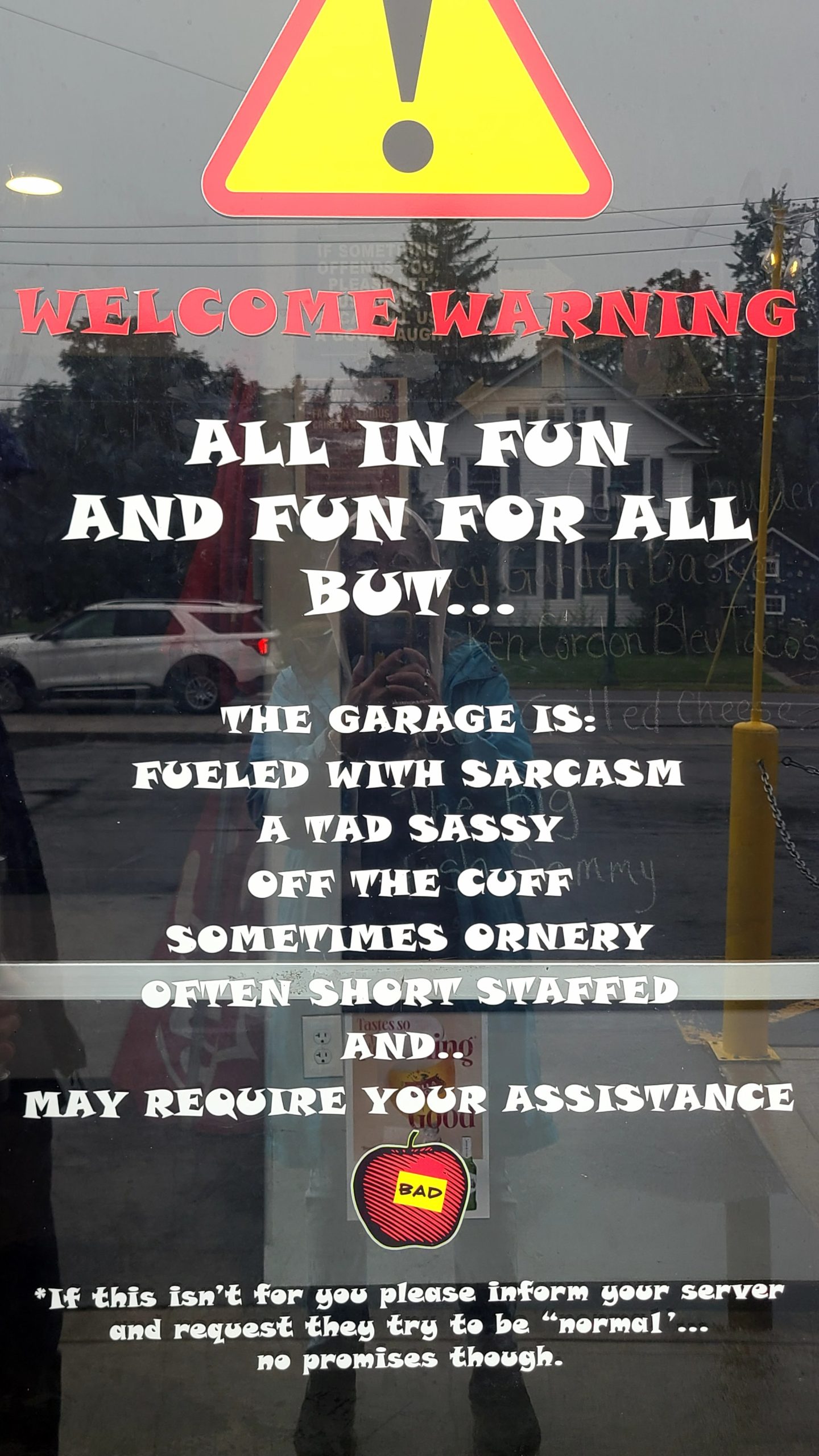
As we prepared for the voyage, we revisited a Watertown eatery, the Bad Apple Garage, where insults are served along with delicious tomato soup and grilled cheese sandwiches. We hired the same taxi driver from October, Bubba, to take us back to Alexandria Bay from Watertown once we returned the rental car. These repeat experiences felt like coming home, in the way that a cab ride home from the airport feels comforting once the driver turns onto our street.
Who We Met
In A-Bay we ate at a new restaurant, the Old Homestead. The waiter looked familiar, and we looked familiar to him. It turned out that Skyler had waited on us at a different restaurant in October 2025, when we put the boat in storage. What are the odds?
In Clayton, we had a lovely reunion dinner with the crew of L’Attitude Adjustment, Loopers we had met on the Mississippi River and traveled with for several days. Walt and Sarah had been fellow witnesses to one of the saddest events we experienced on the Loop, the death of a beloved dog belonging to the Loopers on Queen Mary. That shared experience, and our experiences rafting up together, had created a bond that lasted two years without any contact. They also remembered Jeff’s advice from two years ago: when asked whether he would fix our sewage disposal system himself: he had evidently said, “Just pay the man” (hire someone else to handle that unpleasant task) – they never forgot it!
Where We Went and What We Did There
In Wellesley Island (Thousand Islands Club), I thoroughly enjoyed using all the amenities. They had a hammock strung between two poles near the docks. I made a point of lying in that hammock every day for at least a few minutes, practicing slowing down, watching the clouds drift by, and sinking into utter relaxation. I also sat for a while one evening in one of the Adirondack chairs placed around the firepit, watching myriad insects flirt with death above the flames.
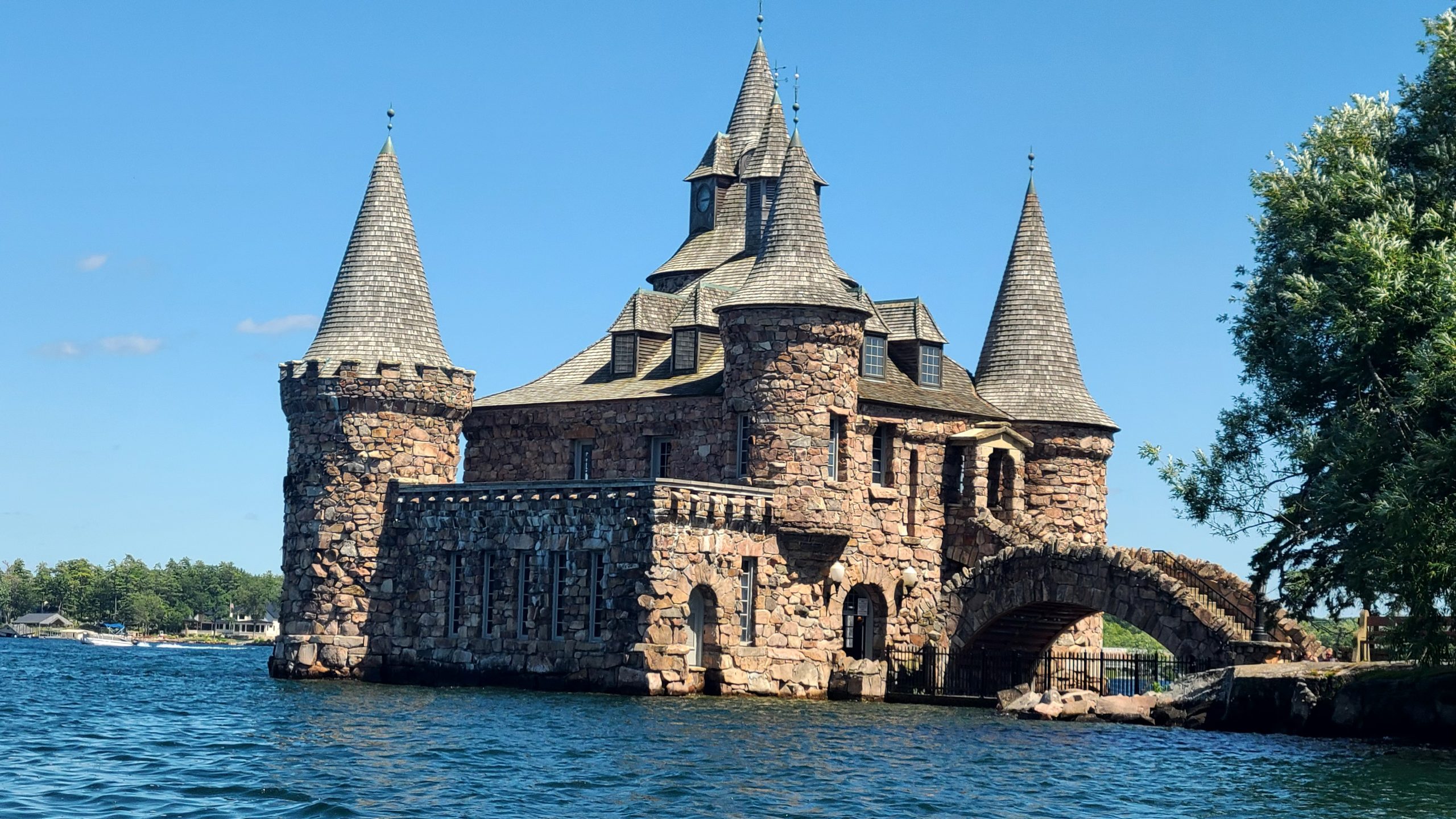
While at the TI Club, we took the dinghy out, testing the engine (and figuring out why it intermittently wouldn’t start – we couldn’t blame that issue on the mechanics!) and visiting the Boldt Castle Boathouse nearby. The original construction had three bays for George Boldt’s various sailboats, with a soaring ceiling to accommodate the sailboat masts, and a suspended ventilation tube to allow the steamship engine to be run inside.
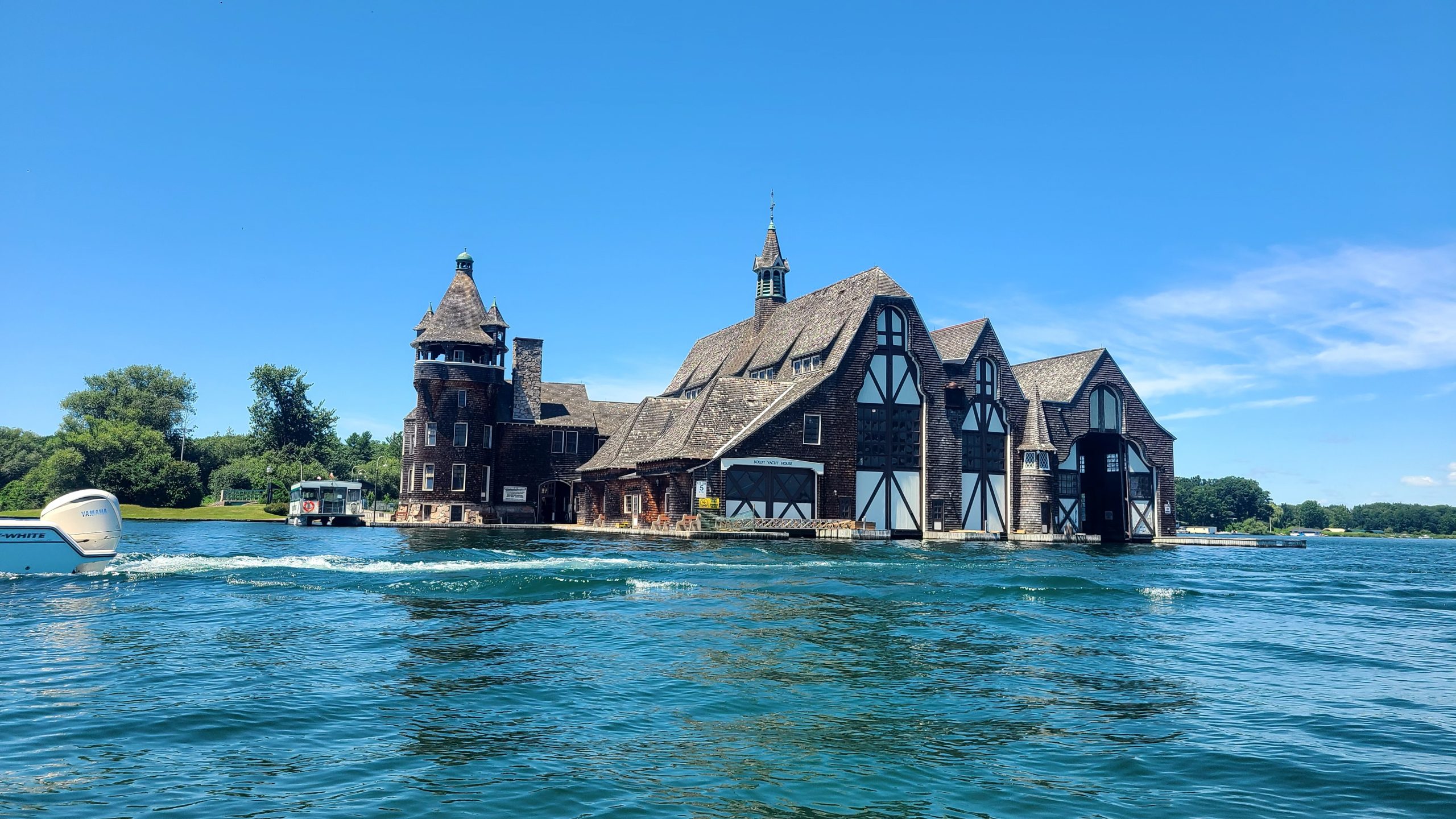
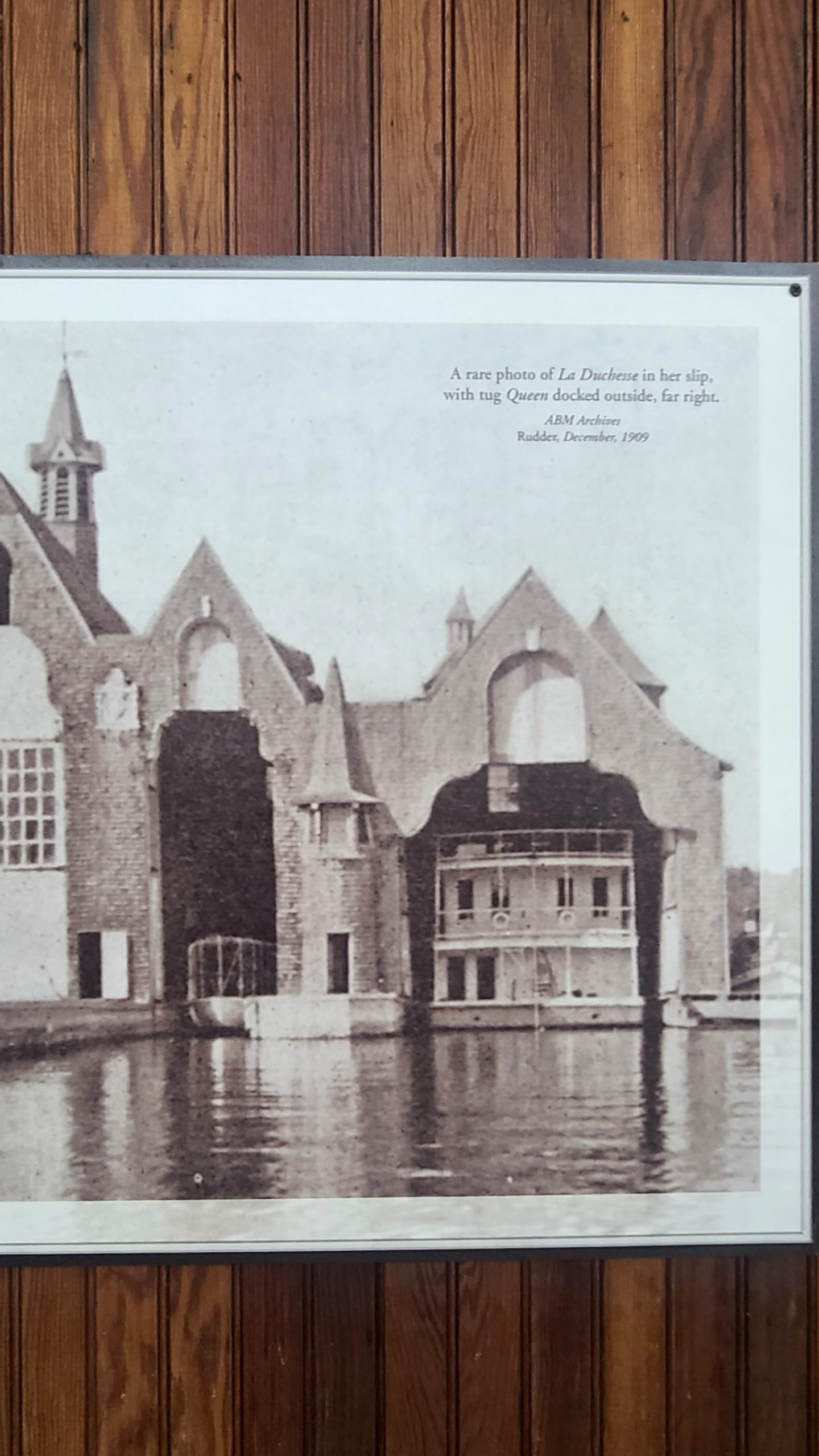
Later Boldt added a fourth bay to house his 104-foot-long houseboat (really a floating barge – it had no engine), La Duchesse. We had missed the chance on Loop 1 to tour La Duchesse (which now resides at the Clayton Wooden Boat Museum), but I had bought a monogrammed sweater with the logo, and nursed a desire to go onboard the historic vessel this time around. It was great to see its erstwhile berth. And when we got to Clayton, we fulfilled my long-held dream, finally touring the beautifully restored, elegant vessel.
What We Learned
The fuel valve, throttle lever, and strap insulation were some of the many “cleanup” issues we were faced with after the mechanics finished their work. Most were small: sealant and glue on carpets, ladder rungs and ceilings; stray screws left lying around on counters and shelves; wood doors they reinstalled upside down; and the 50-amp electrical cable that we used to plug the boat in during the winter, which was missing when we got the boat back (well, that wasn’t so small)…
The cleanup highlighted something we believe: a job isn’t done until all messes are cleaned up, all tools are put away, and all stray screws are accounted for. Not everyone understands or pays attention to this precept. Jeff tries to give constructive feedback to people we hire, so they can benefit from his observations. We never know how these suggestions will be received, but it feels important to contribute to improvements in practices – and we never know who will benefit. Maybe the next Looper who gets work done by these mechanics…
Science lesson: in the presence of moisture or salt, galvanic corrosion (electrolysis) results when stainless steel touches aluminum, resulting in the aluminum, acting as a sacrificial anode, deteriorating. Applied science: the mechanics loosened every strap and inserted a layer of insulation. There was no additional financial cost to us, but the job took several long days of labor, so we had to stay close to A-Bay.
Meticulously😊,
Judy